The link below the picture is to a documentary showing why the chiropractic profession has had a negative stigma for many years. The video delves into the efforts of the AMA (American Medical Association) to discredit, even demonize, chiropractic and any other "alternative" options for healthcare.
This is a must watch for all people to realize that the overall negative perception of chiropractic was founded on falsifications and that the claims that chiropractic is unsafe even harmful are unfounded.Monday, November 12, 2012
Free Documentary about Chiropractic
Wednesday, October 24, 2012
What To Do With All That Halloween Candy?
With Halloween just one week away, I figured that this would be the perfect video to share on the blog. The video (which you can watch by clicking on the link below) gives an alternative to gorging on all of that candy that's stuffed into your children's jack-o-lantern buckets and pillows cases. The video shows what a dental office in Canada has been doing for some years now and honestly, would be a really good idea for us at Cascade Chiropractic & Massage to do in the near future.
Halloween Candy Buy Back - Evans Dental Health - NaturalNews.tv
Now, since we don't do this yet at CC&M, it doesn't mean that you can't do it yourself at home. I'm sure that most kids would love to make a little cash just by giving up some of their Halloween booty. It's also a great learning experience for kids. You can teach them about moderation (not too many people need to eat 3 pounds of candy in a 3 week span) and why that candy is so bad for you (high fructose corn syrup, coloring, fake ingredients, flavorings, etc.).
With regard to what you then do with the "bought back" candy, that's up to you. If you want to donate it to soldiers overseas (I'm sure there's a few good ways to do something like that in this area) or just dump it into the closest trash receptacle, that's your choice. Either way, you're not promote sugar and fake ingredient gluttony to your children and you're actually using Halloween as a learning experience instead of just a candy grubbing extravaganza.
As always, your questions, suggestions, and input is always welcome.
Have a healthy and safe Halloween!
Tuesday, September 18, 2012
FREE Movie through the 22nd
If anyone out there has been hearing about Genetically Modified (GM) foods or Genetically Enhanced (GE) foods and not sure what to make of them or doesn't really know what they are, there's an opportunity to become a little more acquainted with this aspect of our food industry.
There is a brand new documentary that looks into GM/GE foods and the effects that they have on our bodies, animals bodies, and what GM foods really are. It's quite an eye-opening look into what is allowed in the food that we eat and why we should strive to be more attentive to where our food comes from and what the ingredients really are.
You can watch the video for FREE through the 22nd of September. Just click on the link below the picture to go to the website to watch the documentary.

http://geneticroulettemovie.com/
There is a brand new documentary that looks into GM/GE foods and the effects that they have on our bodies, animals bodies, and what GM foods really are. It's quite an eye-opening look into what is allowed in the food that we eat and why we should strive to be more attentive to where our food comes from and what the ingredients really are.
You can watch the video for FREE through the 22nd of September. Just click on the link below the picture to go to the website to watch the documentary.
http://geneticroulettemovie.com/
Tuesday, August 14, 2012
Your Body and the Heat
With temperatures coming this week that are a little unfamiliar to us in the PNW (85, 91, 94), I thought that it would be the opportune time to talk about how our bodies handle and react to the heat.
Personally, I like a little stretch of heat where you can just sit in the shade and sweat a little bit, but I might be alone on that one. With that said, one of the most important ways that your body handles heat is to sweat. Sweating is a good thing. The moisture from your body is released through pores throughout every aspect of your skin for one purpose, to cool your body. When that sweat evaporates from you skin, it acts to cool down your body's overall temperature. So, go ahead and sweat. Who cares if you have a slight "shimmer" or your shirt looks like you just stepped out of the shower.

One other thing that your body does when hot is to rush blood to the surface of the skin. Just this past Sunday I noticed my son's cheeks were all rosy from running around outside. Your body channels blood in to the tiniest little capillaries in your skin to release heat through your skin and to allow the evaporating sweat to cool the blood as well. That slightly cooled blood then flows to the other heated up areas of your body.
Finally, if you've ever noticed a dog panting on a hot day, it's to release body heat. Humans do it to, we just typically don't let our tongues flop out of our mouths when we do it. When it's hot this week, do a little people watching. You might be surprised at how many people are breathing more heavily with their mouths open, even if they are just walking or even sitting. When you "pant" you release the hot air from you lungs. It's another way to release heat from the blood that comes in very close contact with the alveoli of your lungs.
With that said, you do need to be on the lookout for some symptoms that would require you or a loved one to cool down a little faster. Some symptoms include:
excessive sweating (more than usual)
weakness
headache
cramping
nausea
If you or someone else is suffering these symptoms, it's called heat exhaustion. This is when you need to get out of the sun and slowly cool down. Don't just jump into a cold shower. Use cold cloths, take a cool shower, get a fan blowing on you, wet your hair, etc.
So, embrace the heat, just be mindful to be on the lookout if you think you may be getting to hot.
Personally, I like a little stretch of heat where you can just sit in the shade and sweat a little bit, but I might be alone on that one. With that said, one of the most important ways that your body handles heat is to sweat. Sweating is a good thing. The moisture from your body is released through pores throughout every aspect of your skin for one purpose, to cool your body. When that sweat evaporates from you skin, it acts to cool down your body's overall temperature. So, go ahead and sweat. Who cares if you have a slight "shimmer" or your shirt looks like you just stepped out of the shower.
One other thing that your body does when hot is to rush blood to the surface of the skin. Just this past Sunday I noticed my son's cheeks were all rosy from running around outside. Your body channels blood in to the tiniest little capillaries in your skin to release heat through your skin and to allow the evaporating sweat to cool the blood as well. That slightly cooled blood then flows to the other heated up areas of your body.
Finally, if you've ever noticed a dog panting on a hot day, it's to release body heat. Humans do it to, we just typically don't let our tongues flop out of our mouths when we do it. When it's hot this week, do a little people watching. You might be surprised at how many people are breathing more heavily with their mouths open, even if they are just walking or even sitting. When you "pant" you release the hot air from you lungs. It's another way to release heat from the blood that comes in very close contact with the alveoli of your lungs.
With that said, you do need to be on the lookout for some symptoms that would require you or a loved one to cool down a little faster. Some symptoms include:
excessive sweating (more than usual)
weakness
headache
cramping
nausea
If you or someone else is suffering these symptoms, it's called heat exhaustion. This is when you need to get out of the sun and slowly cool down. Don't just jump into a cold shower. Use cold cloths, take a cool shower, get a fan blowing on you, wet your hair, etc.
So, embrace the heat, just be mindful to be on the lookout if you think you may be getting to hot.
Wednesday, July 11, 2012
You Have a Choice!
One thing that I have come across since being a provider in the medical field is that it seems like people are told that there is one set way to do things and that there are no other alternatives. That is definitely NOT the case. You have a choice!
The fact of the matter is, in most cases, there ARE other choices. Especially when it comes to a procedure or medication that has serious implications or possible side effects.
I have heard stories of people being told that they need to have surgery; there's no other choice. I've heard people told that they need something removed; there's no other choice. I heard MANY people told that they need to take this drug or that drug; there's no other choice. I've been told that I NEED a flu vaccine; there's no other choice.
The point of my blog this time is to not only make people realize that there are other choices, bu that you need to do research on your own to come to your own decision prior to having carpal tunnel surgery, getting the Guardasil vaccine, taking Lisinopril, or anything else.
Ask your doctors questions. Ask them why. Ask them about side effects. Ask them about success rates. Ask them if there are any cases of severe injury or even fatality. Consult outside sources. Go online and look up the labels on drugs and read them. Try to find studies on new drugs and their results. Do the research.
Why? Because in most cases we're not getting the whole story.
Just like in a decision on politics, religion, ethical issues, etc., it's best to be informed on both sides. You don't need to follow blindly just because someone said so.
I encourage my patients to ask me questions. Before I send a new patient on their way after their first visit I make sure that they don't have any unanswered questions at the time. Then I encourage them to call, e-mail, or write down any questions that pop up to ask on their next visit. I like to give people a choice. I encourage making your own decision.
I have no issue with people making a choice that would be opposite of what I would choose, just as long as they looked at it from every angle and decided what's best for them and their situation.
So, you DO have a choice. Just make an informed one.
The fact of the matter is, in most cases, there ARE other choices. Especially when it comes to a procedure or medication that has serious implications or possible side effects.
The point of my blog this time is to not only make people realize that there are other choices, bu that you need to do research on your own to come to your own decision prior to having carpal tunnel surgery, getting the Guardasil vaccine, taking Lisinopril, or anything else.
Ask your doctors questions. Ask them why. Ask them about side effects. Ask them about success rates. Ask them if there are any cases of severe injury or even fatality. Consult outside sources. Go online and look up the labels on drugs and read them. Try to find studies on new drugs and their results. Do the research.
Why? Because in most cases we're not getting the whole story.
Just like in a decision on politics, religion, ethical issues, etc., it's best to be informed on both sides. You don't need to follow blindly just because someone said so.
I encourage my patients to ask me questions. Before I send a new patient on their way after their first visit I make sure that they don't have any unanswered questions at the time. Then I encourage them to call, e-mail, or write down any questions that pop up to ask on their next visit. I like to give people a choice. I encourage making your own decision.
I have no issue with people making a choice that would be opposite of what I would choose, just as long as they looked at it from every angle and decided what's best for them and their situation.
So, you DO have a choice. Just make an informed one.
Tuesday, June 19, 2012
Conquering the Yard
For those of you who didn't already know, my wife, son, and I recently moved into a new house. And, of course, along with that new house comes A LOT of yard work. Old and overgrown landscaping to trim down, a fruit and veggie garden to plant, lawn to be mowed, rocks to dig, etc. So, I have found myself doing more yard work in the past week than I have done in the past year. And, this would definitely be an opportunity for me, and everyone else who is doing yard work, to heed some back safety tips.
Tip #2: When gardening, switch positions often. When able to,
sit in a chair or work at a gardening table/bench. When you need to get low,
you can sit, kneel, lie down, etc. The key is just to not stay in one position
for too long.
Tip #1: When lifting anything, whether it's 5 pounds or 50
pounds, always make sure to bend at the knees and hold the object as close to
your body as possible. This will help prevent from "throwing out" your
back. OR, if you have bad knees, get some youngster to do the lifting for you!
Tip #3: Make your best effort to keep a straight back. The
best way to do that is to try and keep your shoulders pulled back as much as
possible. This will not only keep your shoulders and upper back straight, it
will also help keep your head over your shoulders and your low back straight and
tall.
Tip #4: Use tools. Any tool that has ever been invented was made to make your job easier. It's the definition of a tool. Use a shovel, hoe, rake, trowel, etc. whenever possible. It will put less strain on your back, shoulders, and arms.
Tip #5: Ask for help. Invite people over to have a gardening party. This way, you'll get to hang out with your friends, but more importantly you'll have assistance when needed and get the job done faster.
Tip #6: Be sure to stretch thoroughly before and after yard work. Keeping limber, lean muscles will help prevent any tension and soreness the day after.
Tip #7: Drink like a fish. Staying hydrated is key in any and all situations, but it's definitely important when outside and exercising. Water helps keep your joints lubricated, your muscles pliable, and your mind headache free. Always have a water bottle within reach when you're in the yard.
Tip #8: Get adjusted. The best way to ensure lack of soreness and back pain from doing yard work is to visit your chiropractor beforehand. He/she will be able to get your spine in line before doing any back breaking labor. And, of course, if you need to see a chiro after your yard work, you're more than welcome to do so.
Tuesday, May 1, 2012
5 Cinco de Mayo Food Tips
With Cinco de Mayo just a few short days away, I figured I would offer some advice on how to cut down on calories, increase the health quotient, and still get the most out of those Mexican dishes you crave on Cinco de Mayo.
First of all, Mexican food can be very healthy for you. There are typically lots of fresh fruits and veggies involved and slowly cooked meats and beans. Mexican food isn't just that unhealthy stuff that you get from Taco Bell or one of the other main food chains that serve "Mexican" food. So, here's a few tips on how to eat a little healthier this holiday.
#1: Traditional Food. Typically, traditional Mexican food has more nutritional value than the Americanized versions.
#2: Skip the Sour Cream. Sour cream is loaded with unnecessary calories and fat and has little to no nutritional value. If you still want that creamy taste, opt for some plain Greek yogurt. It has the same texture and essentially the same flavor, but it is also loaded with probiotics.
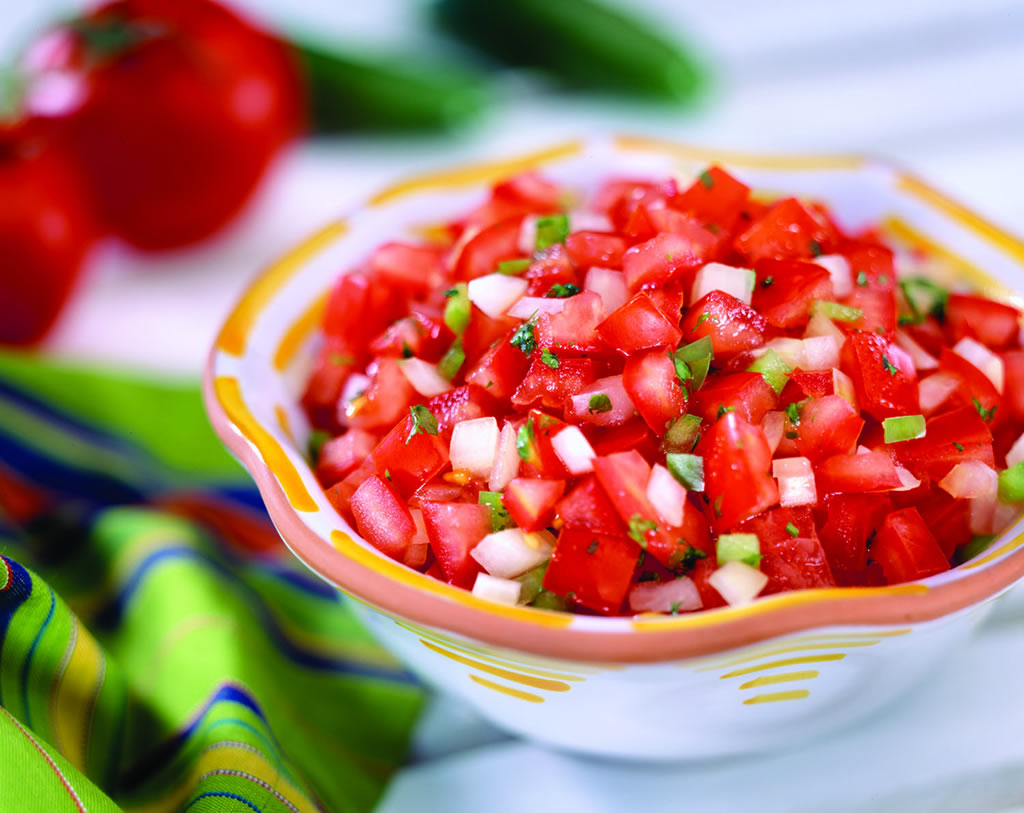
#3: Pile on the Pico. Pico de gallo is a fresh version of salsa usually containing tomatoes, onion, lime juice, jalapenos, cilantro, etc. If you make your own, you can cut down on the oil sometimes used and the salt to make it an even healthier topping. For that matter, pile on as many fresh veggies as you like!
#4: Swap the rice. If you're planning on downing some rice and beans, opt for brown rice. Brown rice has many more vitamins and minerals than it's counterpart, white rice.
#5: Put it in a Bowl. You can cut some unnecessary calories and carbs by turning your tacos / burritos / enchiladas into a salad, especially if you're used to using a deep fried shell.
So there you have it. It's not so hard to cut a few calories and still enjoy some Mexican food on Cinco de Mayo. Although, I have to say that it was hard to narrow it down to just five, so here's a bonus tip. Use fresh herbs and spices like cilantro and cumin. You'll get amazing Mexican flavor and not all that added filler from the pre-packaged spice from the grocery store.
First of all, Mexican food can be very healthy for you. There are typically lots of fresh fruits and veggies involved and slowly cooked meats and beans. Mexican food isn't just that unhealthy stuff that you get from Taco Bell or one of the other main food chains that serve "Mexican" food. So, here's a few tips on how to eat a little healthier this holiday.
#1: Traditional Food. Typically, traditional Mexican food has more nutritional value than the Americanized versions.
#2: Skip the Sour Cream. Sour cream is loaded with unnecessary calories and fat and has little to no nutritional value. If you still want that creamy taste, opt for some plain Greek yogurt. It has the same texture and essentially the same flavor, but it is also loaded with probiotics.
#4: Swap the rice. If you're planning on downing some rice and beans, opt for brown rice. Brown rice has many more vitamins and minerals than it's counterpart, white rice.
#5: Put it in a Bowl. You can cut some unnecessary calories and carbs by turning your tacos / burritos / enchiladas into a salad, especially if you're used to using a deep fried shell.
So there you have it. It's not so hard to cut a few calories and still enjoy some Mexican food on Cinco de Mayo. Although, I have to say that it was hard to narrow it down to just five, so here's a bonus tip. Use fresh herbs and spices like cilantro and cumin. You'll get amazing Mexican flavor and not all that added filler from the pre-packaged spice from the grocery store.
Tuesday, March 27, 2012
The One Exercise NO ONE Should Do
You may be asking yourself, "Why should someone not do an exercise? Exercise is good for you." Well, you're right, but not all exercises are good for you, especially when looking from a chiropractic perspective.
This exercise is a classic that has been done in Phy Ed class since middle school, the Presidential Physical Fitness competition, and Military training to this day. So, what exercise is it?
Sit-Ups.
So, why is a sit-up so bad that no one should do sit-ups? There's a couple reasons. First of all, it's bad for your back. Once you get past the crunch stage of the sit up, all you're doing is putting unneeded stress on your body. Your lumbar spine already has enough stress on it from holding the majority of your body's weight and from all the sitting that we do these days. When you do a sit up, you are creating an unneeded amount of pressure on the discs in the lumbar spine and strain on the overworked muscles that surround the spine.
Another reason no one should do a full sit-up is the strain it puts on a muscle called the psoas muscle. The psoas is a muscle that helps your abdominal muscles when they are weakened by bending your body at the waist or by raising your legs up. In most people, the psoas muscle is already overworked and tightened due to weakened abdominal muscles. By doing a sit up, you are strengthening and tightening an already tightened muscle.
Finally, the last point I want to make is regarding hand position. And this doesn't just pertain to sit-ups, but also crunches. DO NOT place your hands behind your head. Whether you feel it or not, you will more than likely be pulling your head forward and straining the back of your neck. When doing a crunch (not a sit-up!), cross your arms over your chest.
So, what should you do instead of a sit-up?
Crunches. Crunches and sit-ups are very similar. A crunch is basically half of a sit up. What you want to do is pay close attention to your abs contracting. When you feel like they can't tighten any further or if it feels like a natural place to stop, that's where you stop. Sitting all of the way up is unnecessary and detrimental to your spine.
Do These (crunches): NOT these (sit-ups):
This exercise is a classic that has been done in Phy Ed class since middle school, the Presidential Physical Fitness competition, and Military training to this day. So, what exercise is it?
Sit-Ups.
So, why is a sit-up so bad that no one should do sit-ups? There's a couple reasons. First of all, it's bad for your back. Once you get past the crunch stage of the sit up, all you're doing is putting unneeded stress on your body. Your lumbar spine already has enough stress on it from holding the majority of your body's weight and from all the sitting that we do these days. When you do a sit up, you are creating an unneeded amount of pressure on the discs in the lumbar spine and strain on the overworked muscles that surround the spine.
Another reason no one should do a full sit-up is the strain it puts on a muscle called the psoas muscle. The psoas is a muscle that helps your abdominal muscles when they are weakened by bending your body at the waist or by raising your legs up. In most people, the psoas muscle is already overworked and tightened due to weakened abdominal muscles. By doing a sit up, you are strengthening and tightening an already tightened muscle.
Finally, the last point I want to make is regarding hand position. And this doesn't just pertain to sit-ups, but also crunches. DO NOT place your hands behind your head. Whether you feel it or not, you will more than likely be pulling your head forward and straining the back of your neck. When doing a crunch (not a sit-up!), cross your arms over your chest.
So, what should you do instead of a sit-up?
Crunches. Crunches and sit-ups are very similar. A crunch is basically half of a sit up. What you want to do is pay close attention to your abs contracting. When you feel like they can't tighten any further or if it feels like a natural place to stop, that's where you stop. Sitting all of the way up is unnecessary and detrimental to your spine.
Do These (crunches): NOT these (sit-ups):
Friday, March 9, 2012
Daylight Savings
Don't forget to set your clocks 1 hour ahead (ie: if it's 10pm, set them to 11pm) on Saturday night as Daylight Savings begins this Sunday.
Tuesday, March 6, 2012
Back Pain and your Ribs
Time to talk about ribs.
Some of the most "Huh, that's interesting" or "Really?" moments I get as a chiropractor have to do with those 24, long, thin bones that wrap around your chest. When I tell people that part of the reason that they may be experiencing back pain is because of a rib being out of place, they usually have one of the reactions above.
First of all, let's talk about what the ribs do. These 24 bones connect to your thoracic spine (mid and upper back) and wrap around your chest and either directly connect to the sternum (breastbone), indirectly connect to the sternum via cartilage, or wrap about halfway around the chest (floating ribs). The main function of these ribs is to protect vital internal organs such as the lungs, heart, stomach, kidneys, liver. etc. Usually, ribs don't cause any issues. However, when they do, it can be a big deal.
Typically, when someone has a rib that's moved out of place, it presents as one sided pain in the mid and/or upper back that travels under the shoulder blade. Some people can get pain on both sides, pain along the side of the chest, chest pain on the front, and even pain that may feel like the beginning of a heart attack. Often times, it's a very painful ordeal because of all of the muscles attached to the ribs (actually the most pain I've been in was when I had some ribs out from changing our readerboard at work). In fact, between each pair of ribs, there are three muscles connecting the ribs that run in different directions. So, you can imagine that if a rib is being pulled back or pushed forward, it's going to place a lot of strain on those tiny muscles and the other muscles attached to the ribs.
The good news? Ribs that are out of alignment are fairly easily fixed by a chiropractic adjustment. Sometimes the ribs slide right back in place, sometimes it takes a little"coaxing". Most of the time, people get sore after having their ribs put back in place because of the strain on the muscles, but a little ice can work wonders with that.
So, if you're experiencing pain in your upper / mid back that goes underneath you shoulder blade, go have it looked at by a chiropractor. He/she should be able to do wonders for you.
Side Note: No, men do NOT have one less rib than women.
Some of the most "Huh, that's interesting" or "Really?" moments I get as a chiropractor have to do with those 24, long, thin bones that wrap around your chest. When I tell people that part of the reason that they may be experiencing back pain is because of a rib being out of place, they usually have one of the reactions above.
Typically, when someone has a rib that's moved out of place, it presents as one sided pain in the mid and/or upper back that travels under the shoulder blade. Some people can get pain on both sides, pain along the side of the chest, chest pain on the front, and even pain that may feel like the beginning of a heart attack. Often times, it's a very painful ordeal because of all of the muscles attached to the ribs (actually the most pain I've been in was when I had some ribs out from changing our readerboard at work). In fact, between each pair of ribs, there are three muscles connecting the ribs that run in different directions. So, you can imagine that if a rib is being pulled back or pushed forward, it's going to place a lot of strain on those tiny muscles and the other muscles attached to the ribs.
The good news? Ribs that are out of alignment are fairly easily fixed by a chiropractic adjustment. Sometimes the ribs slide right back in place, sometimes it takes a little"coaxing". Most of the time, people get sore after having their ribs put back in place because of the strain on the muscles, but a little ice can work wonders with that.
So, if you're experiencing pain in your upper / mid back that goes underneath you shoulder blade, go have it looked at by a chiropractor. He/she should be able to do wonders for you.
Side Note: No, men do NOT have one less rib than women.
Tuesday, February 21, 2012
Our Sweet Society
This week's blog post comes as a request from a patient and blog reader. Her specific question is regarding Agave as a natural replacement for sugar. Before I get to Agave in particular, I feel like I need to lay out a little ground work on sugar in general.
I think that we could all agree that most Americans eat WAY too much sugar. It's one of the many reasons that rates of Type 2 Diabetes and other conditions such as Syndrome X and other auto-immune diseases are on an exponential rise. However, most people don't realize how much sugar we are actually consuming.
What you need to realize is that I'm not just talking about sugar from candy bars, suckers, and Froot Loops. There's hidden sugar all around us. Most bread and grain products are chock full or sugar in the form of added sugar and the carbohydrates that are broken down into sugar in your digestive tract. Not to mention other foods that have added sugar and processed carbohydrates to make them taste "better".
The other thing about sugar is that not all sugars are created equal. Most sugar in food and candy these days is in the form of Fructose. Now fructose is different than table sugar (sucrose) and very different than the sugar that our bodies require for basic cellular function (glucose). The increase in consumption of fructose, I believe, can be directly linked to the rise in diabetes, obesity, etc.
When fructose is digested in high quantities, your liver is actually doing a lot of the work. When your body breaks down fructose, it needs to treat it kind of like alcohol, which is why it gets broken down in the liver. Also, excess fructose gets easily converted to fat, which tends to accumulate in the gut (if you are a male or a apple shaped female) or in the butt and thighs (if you're a pear shaped female). And we all know that an increase in bodily fat is NOT a good thing.
So what about Agave?
Sad to say, agave isn't that great of a substitute. Yes, it comes from a plant (just like High Fructose Corn Syrup). But, just like HFCS, it needs to be processed. And, unless you're being very careful about the source of your agave syrup, there are almost as many harmful chemicals used to extract the syrup from the agave plant. (For a refresher on HFCS click here.)
One last comment on agave. When you buy agave syrup, you're actually getting a much higher dose of fructose than necessary. In fact, you're getting more fructose than high fructose corn syrup!
So what's a better substitute? Something natural like raw honey (which doesn't require chemical prcessing) could be a good substitute, however, honey is quite high in fructose so you will need to use moderation. Also, an organic sweetener like stevia can work wonders.
Tuesday, February 7, 2012
Pregnancy & Chiropractic
I actually can't believe that I haven't blogged on this topic yet!
When a woman is pregnant, there are all kinds of changes going on (needless to say). These changes drastically effect the body's biomechanics and the alignment of the spine. This means that pregnancy is possibly the most important time for a woman to receive chiropractic care, especially if she is experiencing any back pains.
When a woman is pregnant, hormones are released that prepare the pelvis for delivery of the baby. One of the main functions of these hormones is to loosen the ligaments and tendons holding the pelvis together. However, the tendons and ligaments of the whole body are affected as well. As you may have guessed, this makes it a lot easier for joints to become misaligned.
Along these same lines, it's also vital to keep the spine and pelvis in correct alignment so that the baby is able to pass through the birthing canal with as little resistance as possible. By keeping everything in correct alignment, you are helping the body, in a natural way, to create an optimum environment for the baby and the mother, not only during childbirth, but also during all of the stages of pregnancy.
There are also some specialized techniques that some chiropractors can use during pregnancy. For instance, if a baby is flipped breach, some chiropractors have been trained to use specific adjustments and methods to help the baby flip over. Also, if a mother is overdue, there are some techniques that can naturally help stimulate the birthing process.
I know that if you were to ask my wife if getting regular chiropractic care during pregnancy was a good idea, she would emphatically say "YES!" In fact, she has said on multiple occasions that she was very glad to be married to a chiropractor when pregnant (not only for her back but also for her ankles which were taking the brunt of the extra weight).
Not only is it a good idea, it's very safe and natural for the mother and for the baby. It's more safe and natural than taking Tylenol for those aches and pains. And if anyone says that you shouldn't go to the chiropractor when pregnant, ask "why?" And if they tell you why they think you shouldn't go, have them talk to me. I'd be more than willing to share my opinion and experience.
Tuesday, January 17, 2012
Start your Day with Cereal?
Just today, I read an article about the most unhealthy cereals for kids (or adults for that matter). I thought they did a good job of portraying how detrimental sugar laden cereals can be. However, the one issue that I have with the article is the suggestion of "healthier" cereal options.
Now, don't get me wrong, a bowl of Unfrosted Mini Wheats is going to be much better than a bowl of Froot Loops Marshmallow. You're getting MUCH less sugar. But when we look at foods that are healthy for your, we don't only look at the sugar content. You need to look at the food as a whole.
Most cereals are carbohydrates, and simple carbohydrates at that. Simple carbohydrates have little to no nutritional value to them. They get broken down into sugar in our digestive tracts and not much else. So, even if you're choosing a bowl of Cheerios, you're still getting more sugar than your body needs in the morning.
One other aspect that cereals are severely lacking is in the Vitamin and Mineral department. You may have noticed that most cereals are "fortified" with many vitamins and minerals. That means that they add vitamins and minerals to the cereal. That's good right?
Not so much. The reason that the cereal industry fortifies their cereal is because of what happens in the processing of the cereal. When making a cereal, they start out with a relatively healthy grain that is full of minerals and vitamins. In order to get it to the correct size, shape, texture, and flavor, they need to completely change the grain. And, in may of those steps, most, if not all, of the natural vitamins and minerals are lost. So, they just replace them. The issue with the fortification of vitamins and minerals is that they are all created in a lab and most are indigestible by the human body.
Finally, the ingredient that most cereals are severely lacking is healthy protein. In order for you to start your day off right and not have the 10:30 crash is to get protein in your breakfast. Good sources of healthy protein are organic, free range eggs and meat, nuts, and raw milk and raw milk products.
So, if you're one of those people who's been eating Lucky Charms every morning since you were 2 and need to have multiple cups of coffee just to get through the day, try at least one day a week with replacing that bowl of fortified sugar grain with a healthier, protein option.
Tuesday, January 3, 2012
Chiropractic & Stress
I know it's been a while since my last post. The holiday season was a little hectic and the blog kind of fell to the wayside. Anyway.
As I'm sure you all know, the holiday season can be a stressful time no matter what your situation. And now that the holiday season is officially over, there's some things that you can do to de-stress.

Most people don't associate chiropractic with being a de-stressor, however, regular chiropractic care is one of the best ways to ensure that stress doesn't take a stranglehold on your body.
When your spine and nervous system are correctly aligned, there won't be any disturbances with the connection from your brain to your body and vice versa. When your body and brain are able to communicate without any interference, it can deal with other problems more easily.
When your spine is lined up, it also isn't pulling on muscles, ligaments, and tendons abnormally. If these soft tissues aren't being stressed in different directions, it is much easier for your body to relax and to feel relaxed.
There's another realm of medicine that we have talked about briefly called psychoneuroimmunology. This basically states that when your body is able to correctly communicate with itself, it makes you have a better outlook on life. Essentially, you feel happier. And when you feel happier, you tend to be less stressed.
So, I guess what I'm really trying to say is that if you feel stressed or even overly stressed, try getting a chiropractic adjustment along with your massage or meditation or deep breathing. It will probably help more than you might think.
As I'm sure you all know, the holiday season can be a stressful time no matter what your situation. And now that the holiday season is officially over, there's some things that you can do to de-stress.
Most people don't associate chiropractic with being a de-stressor, however, regular chiropractic care is one of the best ways to ensure that stress doesn't take a stranglehold on your body.
When your spine and nervous system are correctly aligned, there won't be any disturbances with the connection from your brain to your body and vice versa. When your body and brain are able to communicate without any interference, it can deal with other problems more easily.
When your spine is lined up, it also isn't pulling on muscles, ligaments, and tendons abnormally. If these soft tissues aren't being stressed in different directions, it is much easier for your body to relax and to feel relaxed.
There's another realm of medicine that we have talked about briefly called psychoneuroimmunology. This basically states that when your body is able to correctly communicate with itself, it makes you have a better outlook on life. Essentially, you feel happier. And when you feel happier, you tend to be less stressed.
So, I guess what I'm really trying to say is that if you feel stressed or even overly stressed, try getting a chiropractic adjustment along with your massage or meditation or deep breathing. It will probably help more than you might think.
Tuesday, November 29, 2011
Buyer Beware
This is a topic I have been meaning to write about for some time now. When you go to the grocery store, if you're like me, you try to buy things that are as healthy as possible. However, when you're looking at a package that says "All Natural", you still need to be wary.
Ideally, "All Natural" would mean that the product would be healthy for you. Sometimes, that's not the case. Typically, "All Natural" means that there are no food products that don't exist in nature. However, "All Natural" products could still contain items that have been modified, sprayed, changed, or created in a lab somewhere.
For instance, I've commented on how High Fructose Corn Syrup is bad for you, but it would be considered "All Natural" since it comes from corn. Another example that I've written about would be with Genetically Modified (GMO) products. All these products are still grown in a farm or greenhouse somewhere, but have pesticides put into their genes.
Another reason that "All Natural" foods may not be such a great choice is their nutritional value. Something that is "All Natural" can still be high in sugar, fat, salt, simple carbs, etc. In fact, that goes for organic products as well. No matter if it's "All Natural", organic, or not, you still need to look at the nutrition facts. You need to be very mindful about what you're buying, and not just trusting that the product is good for you because the manufacturer put a fancy decal on the box.
So, what's the best way to avoid all of this trouble? Buy as many fresh products and try to avoid anything in a package.
Ideally, "All Natural" would mean that the product would be healthy for you. Sometimes, that's not the case. Typically, "All Natural" means that there are no food products that don't exist in nature. However, "All Natural" products could still contain items that have been modified, sprayed, changed, or created in a lab somewhere.
For instance, I've commented on how High Fructose Corn Syrup is bad for you, but it would be considered "All Natural" since it comes from corn. Another example that I've written about would be with Genetically Modified (GMO) products. All these products are still grown in a farm or greenhouse somewhere, but have pesticides put into their genes.
Another reason that "All Natural" foods may not be such a great choice is their nutritional value. Something that is "All Natural" can still be high in sugar, fat, salt, simple carbs, etc. In fact, that goes for organic products as well. No matter if it's "All Natural", organic, or not, you still need to look at the nutrition facts. You need to be very mindful about what you're buying, and not just trusting that the product is good for you because the manufacturer put a fancy decal on the box.
So, what's the best way to avoid all of this trouble? Buy as many fresh products and try to avoid anything in a package.
Tuesday, November 1, 2011
Soy you Think it's Good for your Body?
These days, it seems like more and more people are realizing that milk doesn't sit too well with them. So what to put in that glass or pour over your cereal? Many people are turning to soy. But, is soy such a good alternative? I think you can probably guess where I'm going with this one.

I have a couple of issues with soy, the first being a good replacement for milk. First of all, soy isn't the complete food that it's cracked up to be. For something to be a complete food, it needs to be a food that you could survive on without eating anything else. Soy is not a complete food for a number of different reasons. It does NOT have a complete and full spectrum of vitamins and minerals that your body needs. Also, the protein in soy may be a decent protein, but it is highly indigestible by the human digestive system. (In fact, the most digestible soy products are fermented soy products such as miso.) You will NOT be getting the required nutrients that your body needs and craves from being on a strict soy diet. It could even lead to serious malnutrition diseases by being on a strictly soy diet.
The second big reason that I'm not much of a fan of soy is because of what are called phytoestrogens (I'll call them PEs cause it's easier to type). PEs are structures naturally within the soybean. PEs are exactly what they sound like, estrogen compounds. Now, most people know that women have higher estrogen and men have higher testosterone. But men also have estrogen. When you increase soy intake, you are also increasing your estrogen intake with PEs. In men, this could lead to hormonal changes that give higher levels of estrogen. Not only that, but higher estrogen levels in women can be a big deal as well. Higher estrogen can lead to things such as an increased risk for breast cancer or infertility. Not to mention that if you give your baby soy formula, you will be exposing them to much higher levels of estrogen in the form of PEs before their little body can handle it.
Finally, the last big issue that I have with soy is actually with US soy. Any soy that you buy that was grown in the US is going to be GMO (genetically modified), unless it is certified organic. If you want to read why GMO foods are such a detriment, just re-read my blog titled The Breakdown on GMOs.
So the next time you decide to swap out your milk for soymilk or baby formula for soy formula, just remember, there are better options out their. Try coconut milk, oat milk, almond milk, or even try to get away from the milk dependence that we were brought up with.

I have a couple of issues with soy, the first being a good replacement for milk. First of all, soy isn't the complete food that it's cracked up to be. For something to be a complete food, it needs to be a food that you could survive on without eating anything else. Soy is not a complete food for a number of different reasons. It does NOT have a complete and full spectrum of vitamins and minerals that your body needs. Also, the protein in soy may be a decent protein, but it is highly indigestible by the human digestive system. (In fact, the most digestible soy products are fermented soy products such as miso.) You will NOT be getting the required nutrients that your body needs and craves from being on a strict soy diet. It could even lead to serious malnutrition diseases by being on a strictly soy diet.
The second big reason that I'm not much of a fan of soy is because of what are called phytoestrogens (I'll call them PEs cause it's easier to type). PEs are structures naturally within the soybean. PEs are exactly what they sound like, estrogen compounds. Now, most people know that women have higher estrogen and men have higher testosterone. But men also have estrogen. When you increase soy intake, you are also increasing your estrogen intake with PEs. In men, this could lead to hormonal changes that give higher levels of estrogen. Not only that, but higher estrogen levels in women can be a big deal as well. Higher estrogen can lead to things such as an increased risk for breast cancer or infertility. Not to mention that if you give your baby soy formula, you will be exposing them to much higher levels of estrogen in the form of PEs before their little body can handle it.
Finally, the last big issue that I have with soy is actually with US soy. Any soy that you buy that was grown in the US is going to be GMO (genetically modified), unless it is certified organic. If you want to read why GMO foods are such a detriment, just re-read my blog titled The Breakdown on GMOs.
So the next time you decide to swap out your milk for soymilk or baby formula for soy formula, just remember, there are better options out their. Try coconut milk, oat milk, almond milk, or even try to get away from the milk dependence that we were brought up with.
Tuesday, October 25, 2011
Just a Reminder
I would just like to take this opportunity to give a reminder to anyone who follows my blog:
Your questions and comments are always welcome.
Whether you agree, disagree, have a quandary, or simply have something to say, I look forward to people commenting on my blog. It means that the information is getting out there.
I will do my best to respond to your comments as swiftly as possible and make a solid effort on further explaining myself or answering any questions that may have been posed. Even if the comments are to blog posts from last year.
One of the points of this blog is to start discussions and there's no better place to hold or continue a discussion than in the comment section.
I hope that everyone's health continues to reap life's benefits. Especially with Halloween coming up!
Your questions and comments are always welcome.
Whether you agree, disagree, have a quandary, or simply have something to say, I look forward to people commenting on my blog. It means that the information is getting out there.
I will do my best to respond to your comments as swiftly as possible and make a solid effort on further explaining myself or answering any questions that may have been posed. Even if the comments are to blog posts from last year.
One of the points of this blog is to start discussions and there's no better place to hold or continue a discussion than in the comment section.
I hope that everyone's health continues to reap life's benefits. Especially with Halloween coming up!
Tuesday, October 11, 2011
Are You on Schedule?
I decided that I wanted to give a sneak peak of my upcoming Vaccination Education Class being held at the office on Wednesday, October 26th at 6pm. So, my blog topic for this week is going to deal with the ever expanding vaccination schedule that we are to adhere to.
Ever since the first vaccines arrived way back in the late 18th century, there have been more and more vaccines added to the mandated list from our Department of Health and Centers for Disease Control and Prevention. Back in the mid 20th century, it didn't seem like such a big deal. You'd just get a couple shots and call it good. Today, that's a whole different story. Here's a look at how that vaccination schedule has changed over the years:
1980 - 20 vaccines
1995 - 40 vaccines
2011 - 68 vaccines
Now, I do need to state that these numbers may not be accurate. The reason is, these numbers are the number of vaccines that someone is recommended to receive by the time they turn 18. These numbers don't even accout for voluntary vaccines such as the HPV vaccine or Gardasil (future topic). They also don't account for the adult vaccines that are recommended (flu vaccine, shingles vaccine, etc.)
Mercury
Phenoxyethanol (ingredient in antifreeze)
So if you'd like to find out more about vaccines, the vaccine schedule, or the new WA State Vaccine Laws, stop by the clinic if you're in the area on the 26th at 6pm to learn more and to join in on a hearty discussion.
Ever since the first vaccines arrived way back in the late 18th century, there have been more and more vaccines added to the mandated list from our Department of Health and Centers for Disease Control and Prevention. Back in the mid 20th century, it didn't seem like such a big deal. You'd just get a couple shots and call it good. Today, that's a whole different story. Here's a look at how that vaccination schedule has changed over the years:
1980 - 20 vaccines
1995 - 40 vaccines
2011 - 68 vaccines
Now, I do need to state that these numbers may not be accurate. The reason is, these numbers are the number of vaccines that someone is recommended to receive by the time they turn 18. These numbers don't even accout for voluntary vaccines such as the HPV vaccine or Gardasil (future topic). They also don't account for the adult vaccines that are recommended (flu vaccine, shingles vaccine, etc.)
As you can see, the number of vaccines that are recommended has skyrocketed over recent years. I was able to do a little calculation, and by the year 2020, at this rate, our children will be required/recommended to receive 80 vaccines before the age of 18!
Now. if you don't think that's an issue, consider all of the stuff that gets put into vaccines and how much is getting put into your infant / child over that 68 vaccines time period. Ingredients such as:
Formaldehyde
AluminumMercury
Phenoxyethanol (ingredient in antifreeze)
Peanut oil
Latex
Human and animal cells
Wednesday, October 5, 2011
Chronic Ear Infections - Just a Phase?
This past Sunday, I was sitting in church with the family and there was a prayer request for a little girl who would be going through surgery to put tubes in her ears because she had been suffering from chronic, multiple ear infections. I have to say that my heart went out to her even though I had never met her before and wished that I had met her previously. The reason is simple. I believe that no child should have to get tubes put in their ears.
Even though the surgery seems relatively simple and harmless, you're always going to be messing with the body's natural state. You have a barrier (ear drum) between your outer and inner ear for a reason. One reason is so that you can hear, the other is to prevent things from getting into your inner ear. Most of the time, tubes are put in the ears to prevent build up in the inner ear. But why is there buildup in the first place?
What I would have told these parents to try (assuming they hadn't already) would be to get rid of the cause of the buildup. Like so many other western medicine remedies, you treat the symptom, not the cause. As a chiropractor, I like to treat the cause of the problem, preferably with minimally invasive procedures.
So, what could be the cause of the buildup and chronic infections? 3 Things:
1) Diet. Most food that we and our children eat (mainly store bought dairy and foods with gluten) are high in sugar and cause general inflammation in our bodies. The bacteria that are responsible for many ear infections like this. They feed off of the excess sugar, multiply and cause our body to react by sending inflammation and mucus to the area to stop the bacteria. many times, this inflammation, mucus, bacteria mixture travels up a tube in the back of the throat called the Eustachian Tube to the inner ear. The tube gets blocked, more gunk builds up, and you get an inner ear infection. So, if you get rid of the offending bacteria, no more infections right? If only that were the case.
2) Over Prescription of Antibiotics. So when you take an antibiotic to kill the "bad" bacteria, it's all good right? Wrong, you're also killing off the millions of good bacteria in your body that we referenced in an earlier post. These good bacteria (probiotics) help fend off further infections. When you take an antibiotic, it is ESSENTIAL to build the good bacteria back up by taking a probiotic to help fend off future infections. Also, when you take an antibiotic, some of the bad bacteria are going to survive. They stick around and multiply and can cause future ear infections unless further steps are taken. When this happens, many pediatricians prescribe another and another round of antibiotics. The circle continues until the last resort is tubes. Or is it?
3) Spinal Subluxation. In the upper portion of the spine, there are nerves that travel into the ears and throat. If there is some sort of irritation to those nerves, the area that the nerves go to will also be irritated. This means that the ear, throat, or Eustachian Tube can be more easily irritated and more prone to ear infection. I don't think that it's a coincidence that Dr. Stemp (the other chiropractor at Cascade Chiropractic & Massage) never had an ear infection growing up with both parents being chiropractors.
So, what would I have told the parents of this little girl?
#1) Stop all dairy and gluten intake for your daughter for at least 6 months and supplement probiotics.
#2) Let me take a look at her spine and ears.
At worst, it would do nothing and we would look into some other, more natural remedies. At best, she wouldn't get ear infections anymore. Just the thought that this might work over needing to put your child under anesthesia to have surgery would make me try it as a parent.
Wednesday, September 21, 2011
Ice or Heat? Which is Better?
I get a lot of questions as a chiropractor about what to do when you get hurt, what exercises to do, what's the best posture, etc. Probably one of the most frequent qu
estions that I get is whether to put heat or ice on an area. And I have to say, it's a very good question, and it basically boils down to one thing:
If a patient and I find that ice is not working for the area, I usually tell them to do both. You can put heat on the area (best form would be a hot bath or hot tub) but then put the ice on afterward, and always end with ice. You will still get the relaxing feeling from the heat, but also the anti-swelling effect of the ice. This alternating of heat and ice can actually help the flow of the fluid that is bringing healing components to the damaged area.
So why err on the side of ice?
It has to do with the swelling in the area. When your body gets injured, it needs to send fluid (swelling) to that area to help it heal. The issue with that is most people don't move correctly when hurt. When this happens, that swelling stagnates in the area and can cause issues such as an increase in pain, irritation to nerves, and/or decreased mobility. And correct mobility in an injured area has been shown to help in the healing process and help prevent issues down the road
It also helps that ice dumbs down and numbs the pain a little bit.
It boils down to this. Anytime you injure your body, it's essentially like spraining your ankle. I guarantee you will not see a coach or an athletic trainer put heat on that sprained ankle. They put ice on it to keep the swelling at a manageable level so that they are able to prevent immobility to the injured joint.
So, the next time you get an injury, put some ice on it. Just remember that 20 minutes should be plenty of time, but you will need to do it more than once. Give yourself at least a 40 minute break before you put the ice on again. An BE SURE to have some sort of barrier between your skin and the ice. For instance, a t-shirt works really well.
When in doubt, use ice.
In fact, I rarely tell my patients to put heat on an area unless it is a chronically tight muscle that needs a little coaxing into relaxation. I know, heat usually feels better than ice, but the problem that I have with heating a general area is the effect that it has on swelling.
Now, don't get me wrong, swelling is an essential part of the healing process. Without some swelling, your body would not be able to repair the damaged structure. However, when you put heat on an area that is already swollen, it causes more fluid to go to that area which can increase the pressure and pain in the painful area.
So why err on the side of ice?
It has to do with the swelling in the area. When your body gets injured, it needs to send fluid (swelling) to that area to help it heal. The issue with that is most people don't move correctly when hurt. When this happens, that swelling stagnates in the area and can cause issues such as an increase in pain, irritation to nerves, and/or decreased mobility. And correct mobility in an injured area has been shown to help in the healing process and help prevent issues down the road
It also helps that ice dumbs down and numbs the pain a little bit.
It boils down to this. Anytime you injure your body, it's essentially like spraining your ankle. I guarantee you will not see a coach or an athletic trainer put heat on that sprained ankle. They put ice on it to keep the swelling at a manageable level so that they are able to prevent immobility to the injured joint.
So, the next time you get an injury, put some ice on it. Just remember that 20 minutes should be plenty of time, but you will need to do it more than once. Give yourself at least a 40 minute break before you put the ice on again. An BE SURE to have some sort of barrier between your skin and the ice. For instance, a t-shirt works really well.
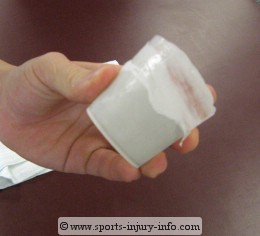
And if you want to do a little gentle massage of the injured area while icing, fill up a little Dixie cup with water, freeze it, rip the bottom of the cup off so that the ice is exposed, and rub the hurt area with the exposed ice for about 10 minutes making sure to keep the ice moving at all times.
(In this picture, they ripped off the top. I find it easier to rip off the bottom, that way, the ice won't fall out, and you can put the leftover ice cup inside another Dixie cup and place in the freezer for later)
And as always, questions and comments are always welcome. (If you have a question that you don't want seen by other people, feel free to e-mail Dr. Mike at mjenstaddc@gmail.com)
Subscribe to:
Posts (Atom)