I would just like to take this opportunity to give a reminder to anyone who follows my blog:
Your questions and comments are always welcome.
Whether you agree, disagree, have a quandary, or simply have something to say, I look forward to people commenting on my blog. It means that the information is getting out there.
I will do my best to respond to your comments as swiftly as possible and make a solid effort on further explaining myself or answering any questions that may have been posed. Even if the comments are to blog posts from last year.
One of the points of this blog is to start discussions and there's no better place to hold or continue a discussion than in the comment section.
I hope that everyone's health continues to reap life's benefits. Especially with Halloween coming up!

Tuesday, October 25, 2011


Tuesday, October 11, 2011
Are You on Schedule?
I decided that I wanted to give a sneak peak of my upcoming Vaccination Education Class being held at the office on Wednesday, October 26th at 6pm. So, my blog topic for this week is going to deal with the ever expanding vaccination schedule that we are to adhere to.
Ever since the first vaccines arrived way back in the late 18th century, there have been more and more vaccines added to the mandated list from our Department of Health and Centers for Disease Control and Prevention. Back in the mid 20th century, it didn't seem like such a big deal. You'd just get a couple shots and call it good. Today, that's a whole different story. Here's a look at how that vaccination schedule has changed over the years:
1980 - 20 vaccines
1995 - 40 vaccines
2011 - 68 vaccines
Now, I do need to state that these numbers may not be accurate. The reason is, these numbers are the number of vaccines that someone is recommended to receive by the time they turn 18. These numbers don't even accout for voluntary vaccines such as the HPV vaccine or Gardasil (future topic). They also don't account for the adult vaccines that are recommended (flu vaccine, shingles vaccine, etc.)

Mercury
Phenoxyethanol (ingredient in antifreeze)
So if you'd like to find out more about vaccines, the vaccine schedule, or the new WA State Vaccine Laws, stop by the clinic if you're in the area on the 26th at 6pm to learn more and to join in on a hearty discussion.
Ever since the first vaccines arrived way back in the late 18th century, there have been more and more vaccines added to the mandated list from our Department of Health and Centers for Disease Control and Prevention. Back in the mid 20th century, it didn't seem like such a big deal. You'd just get a couple shots and call it good. Today, that's a whole different story. Here's a look at how that vaccination schedule has changed over the years:
1980 - 20 vaccines
1995 - 40 vaccines
2011 - 68 vaccines
Now, I do need to state that these numbers may not be accurate. The reason is, these numbers are the number of vaccines that someone is recommended to receive by the time they turn 18. These numbers don't even accout for voluntary vaccines such as the HPV vaccine or Gardasil (future topic). They also don't account for the adult vaccines that are recommended (flu vaccine, shingles vaccine, etc.)

As you can see, the number of vaccines that are recommended has skyrocketed over recent years. I was able to do a little calculation, and by the year 2020, at this rate, our children will be required/recommended to receive 80 vaccines before the age of 18!
Now. if you don't think that's an issue, consider all of the stuff that gets put into vaccines and how much is getting put into your infant / child over that 68 vaccines time period. Ingredients such as:
Formaldehyde
AluminumMercury
Phenoxyethanol (ingredient in antifreeze)
Peanut oil
Latex
Human and animal cells
Wednesday, October 5, 2011
Chronic Ear Infections - Just a Phase?

This past Sunday, I was sitting in church with the family and there was a prayer request for a little girl who would be going through surgery to put tubes in her ears because she had been suffering from chronic, multiple ear infections. I have to say that my heart went out to her even though I had never met her before and wished that I had met her previously. The reason is simple. I believe that no child should have to get tubes put in their ears.
Even though the surgery seems relatively simple and harmless, you're always going to be messing with the body's natural state. You have a barrier (ear drum) between your outer and inner ear for a reason. One reason is so that you can hear, the other is to prevent things from getting into your inner ear. Most of the time, tubes are put in the ears to prevent build up in the inner ear. But why is there buildup in the first place?
What I would have told these parents to try (assuming they hadn't already) would be to get rid of the cause of the buildup. Like so many other western medicine remedies, you treat the symptom, not the cause. As a chiropractor, I like to treat the cause of the problem, preferably with minimally invasive procedures.
So, what could be the cause of the buildup and chronic infections? 3 Things:
1) Diet. Most food that we and our children eat (mainly store bought dairy and foods with gluten) are high in sugar and cause general inflammation in our bodies. The bacteria that are responsible for many ear infections like this. They feed off of the excess sugar, multiply and cause our body to react by sending inflammation and mucus to the area to stop the bacteria. many times, this inflammation, mucus, bacteria mixture travels up a tube in the back of the throat called the Eustachian Tube to the inner ear. The tube gets blocked, more gunk builds up, and you get an inner ear infection. So, if you get rid of the offending bacteria, no more infections right? If only that were the case.
2) Over Prescription of Antibiotics. So when you take an antibiotic to kill the "bad" bacteria, it's all good right? Wrong, you're also killing off the millions of good bacteria in your body that we referenced in an earlier post. These good bacteria (probiotics) help fend off further infections. When you take an antibiotic, it is ESSENTIAL to build the good bacteria back up by taking a probiotic to help fend off future infections. Also, when you take an antibiotic, some of the bad bacteria are going to survive. They stick around and multiply and can cause future ear infections unless further steps are taken. When this happens, many pediatricians prescribe another and another round of antibiotics. The circle continues until the last resort is tubes. Or is it?
3) Spinal Subluxation. In the upper portion of the spine, there are nerves that travel into the ears and throat. If there is some sort of irritation to those nerves, the area that the nerves go to will also be irritated. This means that the ear, throat, or Eustachian Tube can be more easily irritated and more prone to ear infection. I don't think that it's a coincidence that Dr. Stemp (the other chiropractor at Cascade Chiropractic & Massage) never had an ear infection growing up with both parents being chiropractors.
So, what would I have told the parents of this little girl?
#1) Stop all dairy and gluten intake for your daughter for at least 6 months and supplement probiotics.
#2) Let me take a look at her spine and ears.
At worst, it would do nothing and we would look into some other, more natural remedies. At best, she wouldn't get ear infections anymore. Just the thought that this might work over needing to put your child under anesthesia to have surgery would make me try it as a parent.
Wednesday, September 21, 2011
Ice or Heat? Which is Better?
I get a lot of questions as a chiropractor about what to do when you get hurt, what exercises to do, what's the best posture, etc. Probably one of the most frequent qu estions that I get is whether to put heat or ice on an area. And I have to say, it's a very good question, and it basically boils down to one thing:
If a patient and I find that ice is not working for the area, I usually tell them to do both. You can put heat on the area (best form would be a hot bath or hot tub) but then put the ice on afterward, and always end with ice. You will still get the relaxing feeling from the heat, but also the anti-swelling effect of the ice. This alternating of heat and ice can actually help the flow of the fluid that is bringing healing components to the damaged area.
So why err on the side of ice?
It has to do with the swelling in the area. When your body gets injured, it needs to send fluid (swelling) to that area to help it heal. The issue with that is most people don't move correctly when hurt. When this happens, that swelling stagnates in the area and can cause issues such as an increase in pain, irritation to nerves, and/or decreased mobility. And correct mobility in an injured area has been shown to help in the healing process and help prevent issues down the road
It also helps that ice dumbs down and numbs the pain a little bit.
It boils down to this. Anytime you injure your body, it's essentially like spraining your ankle. I guarantee you will not see a coach or an athletic trainer put heat on that sprained ankle. They put ice on it to keep the swelling at a manageable level so that they are able to prevent immobility to the injured joint.
So, the next time you get an injury, put some ice on it. Just remember that 20 minutes should be plenty of time, but you will need to do it more than once. Give yourself at least a 40 minute break before you put the ice on again. An BE SURE to have some sort of barrier between your skin and the ice. For instance, a t-shirt works really well.
estions that I get is whether to put heat or ice on an area. And I have to say, it's a very good question, and it basically boils down to one thing:When in doubt, use ice.
In fact, I rarely tell my patients to put heat on an area unless it is a chronically tight muscle that needs a little coaxing into relaxation. I know, heat usually feels better than ice, but the problem that I have with heating a general area is the effect that it has on swelling.
Now, don't get me wrong, swelling is an essential part of the healing process. Without some swelling, your body would not be able to repair the damaged structure. However, when you put heat on an area that is already swollen, it causes more fluid to go to that area which can increase the pressure and pain in the painful area.
So why err on the side of ice?
It has to do with the swelling in the area. When your body gets injured, it needs to send fluid (swelling) to that area to help it heal. The issue with that is most people don't move correctly when hurt. When this happens, that swelling stagnates in the area and can cause issues such as an increase in pain, irritation to nerves, and/or decreased mobility. And correct mobility in an injured area has been shown to help in the healing process and help prevent issues down the road
It also helps that ice dumbs down and numbs the pain a little bit.
It boils down to this. Anytime you injure your body, it's essentially like spraining your ankle. I guarantee you will not see a coach or an athletic trainer put heat on that sprained ankle. They put ice on it to keep the swelling at a manageable level so that they are able to prevent immobility to the injured joint.
So, the next time you get an injury, put some ice on it. Just remember that 20 minutes should be plenty of time, but you will need to do it more than once. Give yourself at least a 40 minute break before you put the ice on again. An BE SURE to have some sort of barrier between your skin and the ice. For instance, a t-shirt works really well.
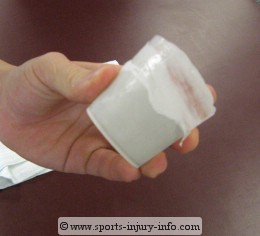
And if you want to do a little gentle massage of the injured area while icing, fill up a little Dixie cup with water, freeze it, rip the bottom of the cup off so that the ice is exposed, and rub the hurt area with the exposed ice for about 10 minutes making sure to keep the ice moving at all times.
(In this picture, they ripped off the top. I find it easier to rip off the bottom, that way, the ice won't fall out, and you can put the leftover ice cup inside another Dixie cup and place in the freezer for later)
And as always, questions and comments are always welcome. (If you have a question that you don't want seen by other people, feel free to e-mail Dr. Mike at mjenstaddc@gmail.com)
Wednesday, September 7, 2011
Why So Many Allergies to Peanuts?
I was reading an article last week by Dr. Tim O'Shea, a chiropractor who's big on educating people about vaccinations (you can find his website here), and I thought that I would share some of the main points.

Dr. O'Shea goes into detail on his theory about why there are so many allergies these days to peanuts. I won't go into all of the specifics, but he points out that peanut allergies, anaphylaxis, and death from peanut allergies has significantly risen since the mid 1900s. His theory; the use of what is called excipients in vaccinations.
The thinking of the drug world is as follows: in order to get the best response from a vaccination, there needs to be a strong allergic response to the vaccine, which in their minds means a stronger immunity to whatever is being administered via the vaccine. One way to get that stronger allergic response is to add an excipient, a molecule to increase the immune response. The preferred excipient today; peanut oils.
Now, if you're a parent and have done any research on what to feed and what not to feed your baby, you'll know that you shouldn't feed peanuts to your child until they are at least 1 year old. The main reason is that the digestive system of a baby is still being formed and small proteins can pass from the gut to the bloodstream. Peanut proteins are capable of causing a higher immune response, which means that babies shouldn't eat peanuts due to the possibility of getting these inflammatory proteins into their bloodstream.
But what about the peanut oils in the vaccines? It's been shown that even the most refined peanut oils contain inflammatory peanut proteins. However, we all know that vaccines don't get ingested with the possibility of the peanut proteins getting blocked by the gut, vaccines are directly injected. That means that the inflammtory peanut proteins go straight to the blood stream.
Now this isn't just the theory of a man trying to rid the world of vaccines, it's a shared theory by people in the medical community as well. Helen Fraser, a researcher, agrees with Dr. O'Shea and even goes on to say, "The peanut allergy epidemic in children was precipitated by childhood injections" (her book can be found at Barnes & Noble).
Children these days are getting an exorbitant number off vaccines by the time they turn 18. And most of these vaccines contain peanut oils to increase the immune response, not to mention other poisonous chemicals. For example, in 1980, a child was to receive 20 vaccines from birth to 18 years of age, today, that number has increased to 68! And that doesn't even include the flu vaccine!
So I guess what I'm trying to say is this: Is it just coinicidental that there has been an increase in allergies and deaths due to peanuts at the same time as there has been an increase in vaccines? I don't think it's coincidence. But if you want to find out for yourself, more power to you.
(If you would like to read Dr. Tim O'Shea's full article, you can find it on his website here)
Dr. O'Shea goes into detail on his theory about why there are so many allergies these days to peanuts. I won't go into all of the specifics, but he points out that peanut allergies, anaphylaxis, and death from peanut allergies has significantly risen since the mid 1900s. His theory; the use of what is called excipients in vaccinations.
The thinking of the drug world is as follows: in order to get the best response from a vaccination, there needs to be a strong allergic response to the vaccine, which in their minds means a stronger immunity to whatever is being administered via the vaccine. One way to get that stronger allergic response is to add an excipient, a molecule to increase the immune response. The preferred excipient today; peanut oils.
Now, if you're a parent and have done any research on what to feed and what not to feed your baby, you'll know that you shouldn't feed peanuts to your child until they are at least 1 year old. The main reason is that the digestive system of a baby is still being formed and small proteins can pass from the gut to the bloodstream. Peanut proteins are capable of causing a higher immune response, which means that babies shouldn't eat peanuts due to the possibility of getting these inflammatory proteins into their bloodstream.
But what about the peanut oils in the vaccines? It's been shown that even the most refined peanut oils contain inflammatory peanut proteins. However, we all know that vaccines don't get ingested with the possibility of the peanut proteins getting blocked by the gut, vaccines are directly injected. That means that the inflammtory peanut proteins go straight to the blood stream.
Now this isn't just the theory of a man trying to rid the world of vaccines, it's a shared theory by people in the medical community as well. Helen Fraser, a researcher, agrees with Dr. O'Shea and even goes on to say, "The peanut allergy epidemic in children was precipitated by childhood injections" (her book can be found at Barnes & Noble).
Children these days are getting an exorbitant number off vaccines by the time they turn 18. And most of these vaccines contain peanut oils to increase the immune response, not to mention other poisonous chemicals. For example, in 1980, a child was to receive 20 vaccines from birth to 18 years of age, today, that number has increased to 68! And that doesn't even include the flu vaccine!
So I guess what I'm trying to say is this: Is it just coinicidental that there has been an increase in allergies and deaths due to peanuts at the same time as there has been an increase in vaccines? I don't think it's coincidence. But if you want to find out for yourself, more power to you.
(If you would like to read Dr. Tim O'Shea's full article, you can find it on his website here)
Tuesday, August 23, 2011
The Chiropractic Sports Physical
As a kid, I remember going in to see the family doctor to get the "OK" to play school sports. I remember that he would check my blood pressure, listen to my heart and lungs, do a few quick tests, and say that I was good to go. I remember it being not such a big deal, but he was checking for some important information. I do, however, remember that he didn't do so much with my posture or spine. I'm guessing the reason would be that he wasn't qualified to to so.
Being in the chiropractic field as I am currently, I realize how important it is for kids to get their posture and spine evaluated prior to engaging in any sports. The sad thing is that most kids don't get their spine evaluated. I believe that if more parents were to bring in their children for a spinal evaluation, some injuries could be prevented.
If a child's skeletal system is not properly aligned, there is going to be an undue amount of stress on areas that aren't used to having as much stress from sports. For instance, baseball players typically bat from one side of the plate, which means swinging and twisting only one way constantly. If there is a misalignment of the pelvis or spine, the body won't be able to move like it's supposed to. That can lead to a higher propensity for injury. Or, for a sport with a lot of running like soccer, any misalignment of the spine or the legs can possibly lead to hip, knee, or ankle injuries.
Many professional, and even college, sports teams have their own personal chiropractor on staff or at least within reach. This tells you that the best of the best know how important it is to keep the spine and body in line when performing physical activities such as sports.
So, if you're bringing your child in for their yearly sports physical with their family doctor, I would highly recommend and even urge you to bring them in to the chiropractor. It is important to make sure the body's organs are funtioning correctly, but it's equally important to have their spine functioning correctly.
Being in the chiropractic field as I am currently, I realize how important it is for kids to get their posture and spine evaluated prior to engaging in any sports. The sad thing is that most kids don't get their spine evaluated. I believe that if more parents were to bring in their children for a spinal evaluation, some injuries could be prevented.
If a child's skeletal system is not properly aligned, there is going to be an undue amount of stress on areas that aren't used to having as much stress from sports. For instance, baseball players typically bat from one side of the plate, which means swinging and twisting only one way constantly. If there is a misalignment of the pelvis or spine, the body won't be able to move like it's supposed to. That can lead to a higher propensity for injury. Or, for a sport with a lot of running like soccer, any misalignment of the spine or the legs can possibly lead to hip, knee, or ankle injuries.
Many professional, and even college, sports teams have their own personal chiropractor on staff or at least within reach. This tells you that the best of the best know how important it is to keep the spine and body in line when performing physical activities such as sports.
So, if you're bringing your child in for their yearly sports physical with their family doctor, I would highly recommend and even urge you to bring them in to the chiropractor. It is important to make sure the body's organs are funtioning correctly, but it's equally important to have their spine functioning correctly.
Tuesday, August 9, 2011
Your Sunscreen May Be More Harm than Good
A few weeks ago, I had blogged about the importance of getting unimpeded sun to up your Vitamin D levels. And, if you remember, I mentioned that it's all about moderation. You don't want to bake in the sun for 3 hours without any protection. However, a lot of the protection (sunscreen) on the market may be more detrimental to your health than beneficial.
In the beginning of July, there was a research article released by a Washington-based non-profit organization called the Environmental Working Group that pointed to a health-hazard possibility of many sunscreens. In their research, they determined that 4 of 5 national brands of sunscreen do NOT adequately protect from "harmful" UVA and UVB rays and that the sunscreens actually may contain harmful chemicals.
Some of those harmful chemicals are:
Oxybenzone (aka: Benzophenone-3) - linked to allergic reactions when exposed to sunlight; hormone disruptions; cancer
Ensulizole (aka: Phenylbenzimidazole Sulfonic Acid) - known to produce free-radicals (cancer causing agents) when exposed to sunlight
Padimate O (aka: PABA) - research has shown this chemical to cause DNA damage, estrogenic activity (increased estrogen levels), and allergic reactions
Octinoxate (aka: Octyl Methoxycinnamate) - most widely used sunscreen ingredient; estrogenic effects, disruption of thyroid hormone and brain signals
As you can see, many of these ingredients may even cause that from which you are trying to protect yourself, skin cancer. These are just some of the chemicals that are placed in sunscreen to help "protect" yourself from the "harmful" rays of the sun.
I you do need to use suncreen and you want to avoid any potentially harmful chemicals, try to find ones without the four chemicals listed above. A good way to do so is to go to a health foods store or supplement store. One other great source is to use a natural or organic baby sunscreen. My wife, son, and I use an organic sunscreen that we bought at Babies R Us. It's a little more expensive, but at least we're not contaminating our bodies with chemicals that may actually cause cancer when exposed to sunlight.

In the beginning of July, there was a research article released by a Washington-based non-profit organization called the Environmental Working Group that pointed to a health-hazard possibility of many sunscreens. In their research, they determined that 4 of 5 national brands of sunscreen do NOT adequately protect from "harmful" UVA and UVB rays and that the sunscreens actually may contain harmful chemicals.
Some of those harmful chemicals are:
Oxybenzone (aka: Benzophenone-3) - linked to allergic reactions when exposed to sunlight; hormone disruptions; cancer
Ensulizole (aka: Phenylbenzimidazole Sulfonic Acid) - known to produce free-radicals (cancer causing agents) when exposed to sunlight
Padimate O (aka: PABA) - research has shown this chemical to cause DNA damage, estrogenic activity (increased estrogen levels), and allergic reactions
Octinoxate (aka: Octyl Methoxycinnamate) - most widely used sunscreen ingredient; estrogenic effects, disruption of thyroid hormone and brain signals
As you can see, many of these ingredients may even cause that from which you are trying to protect yourself, skin cancer. These are just some of the chemicals that are placed in sunscreen to help "protect" yourself from the "harmful" rays of the sun.
I you do need to use suncreen and you want to avoid any potentially harmful chemicals, try to find ones without the four chemicals listed above. A good way to do so is to go to a health foods store or supplement store. One other great source is to use a natural or organic baby sunscreen. My wife, son, and I use an organic sunscreen that we bought at Babies R Us. It's a little more expensive, but at least we're not contaminating our bodies with chemicals that may actually cause cancer when exposed to sunlight.
Subscribe to:
Posts (Atom)